
SERVICES
Everything the outside of your house needs, and the repairs the inside needs after.
Atomic Roofing & Construction started with roofing and grew the way our customers needed it to. A roof job turns up a gutter problem. A storm claim turns into interior work. Rather than hand you off, we built the crews to finish it.
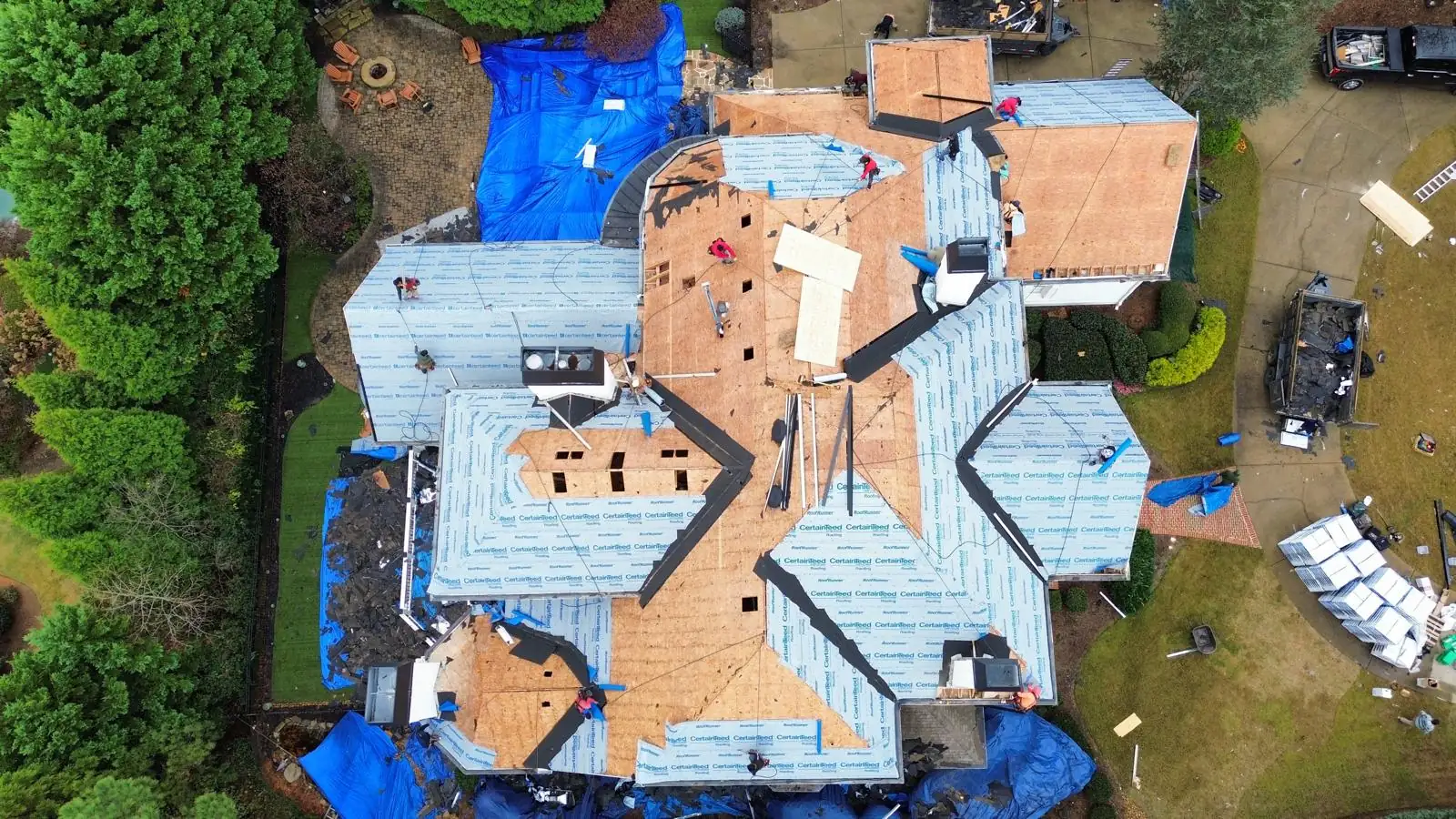
Roof replacement
When a roof is at the end of its life, patching it costs more over five years than replacing it once. Replacement means the old covering comes off so we can see and fix what is underneath, which is the part that decides how long the new roof actually lasts.
What is included
- Full tear off to the decking, so nothing is shingled over
- Decking inspected board by board, with rotten sections replaced and priced before we install
- Ice and water shield in the valleys and at every penetration
- New drip edge, pipe boots, and step flashing, not reused flashing
- Ridge and soffit ventilation checked and corrected if the attic is not breathing
- Full cleanup with a magnet sweep of the yard and driveway
How to know you need it
- Shingle granules collecting in the gutters or at the bottom of the downspouts
- Shingles that look curled, cupped, or bald when you stand at the curb
- Daylight visible through the roof boards when you look up in the attic
- The roof is 18 years or older and has never been replaced
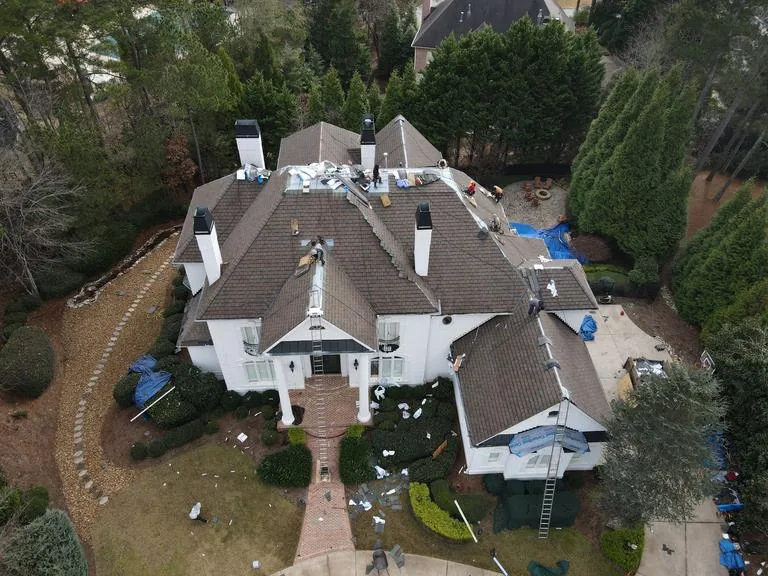
Roof repair
Not every leak means a new roof. A roof with plenty of life left and one failed detail is worth repairing, and we will tell you when that is the case even though the replacement is the bigger job for us.
What is included
- Leak tracing to the actual entry point, which is often not above the stain
- Flashing repair and replacement at chimneys, walls, skylights, and valleys
- Shingle replacement matched as closely as the existing roof allows
- Pipe boot and vent collar replacement, the most common leak source we find
- Written note on how much life the repair buys you, so it is your decision
How to know you need it
- A brown or yellow stain on a ceiling or on the wall below a window
- Shingles visibly lifted or missing after a wind event
- Drips or damp insulation in the attic after heavy rain
Gutters
Gutters are the least expensive part of the building envelope and the one that causes the most costly damage when they fail. Water that does not get moved away from the house ends up in the fascia, the siding, and eventually the foundation.
What is included
- Seamless gutter formed on site, so the only joints are at the corners
- Fascia inspected and repaired before anything is hung on it
- Downspouts routed to actually discharge away from the foundation
- Gutter guards where tree cover justifies them, and honesty when it does not
- Hidden hangers rather than spikes, spaced for Georgia rainfall
How to know you need it
- Water sheeting over the front edge during a normal rain
- Peeling paint or soft wood on the fascia board behind the gutter
- Trenching or splash staining in the beds directly under the roofline
- Gutters visibly pulling away from the house
Siding
Siding is the second half of the envelope and it fails quietly. By the time it looks bad from the street, water has usually been getting behind it for a while. We match what the house already has rather than talking you into a full re-clad you do not need.
What is included
- Fiber cement, vinyl, and wood, repaired or replaced to match the existing profile
- Sheathing and framing checked for moisture once the old siding is off
- House wrap and flashing corrected at windows and doors, where most leaks start
- Trim, corner boards, and soffit repaired as part of the same scope
- Caulking and paint on wood and fiber cement, not left for you to arrange
How to know you need it
- Boards that are soft or spongy when pressed near the bottom of a wall
- Paint failing in the same spot repeatedly after being redone
- Visible gaps at the corners, or siding that has cupped away from the wall
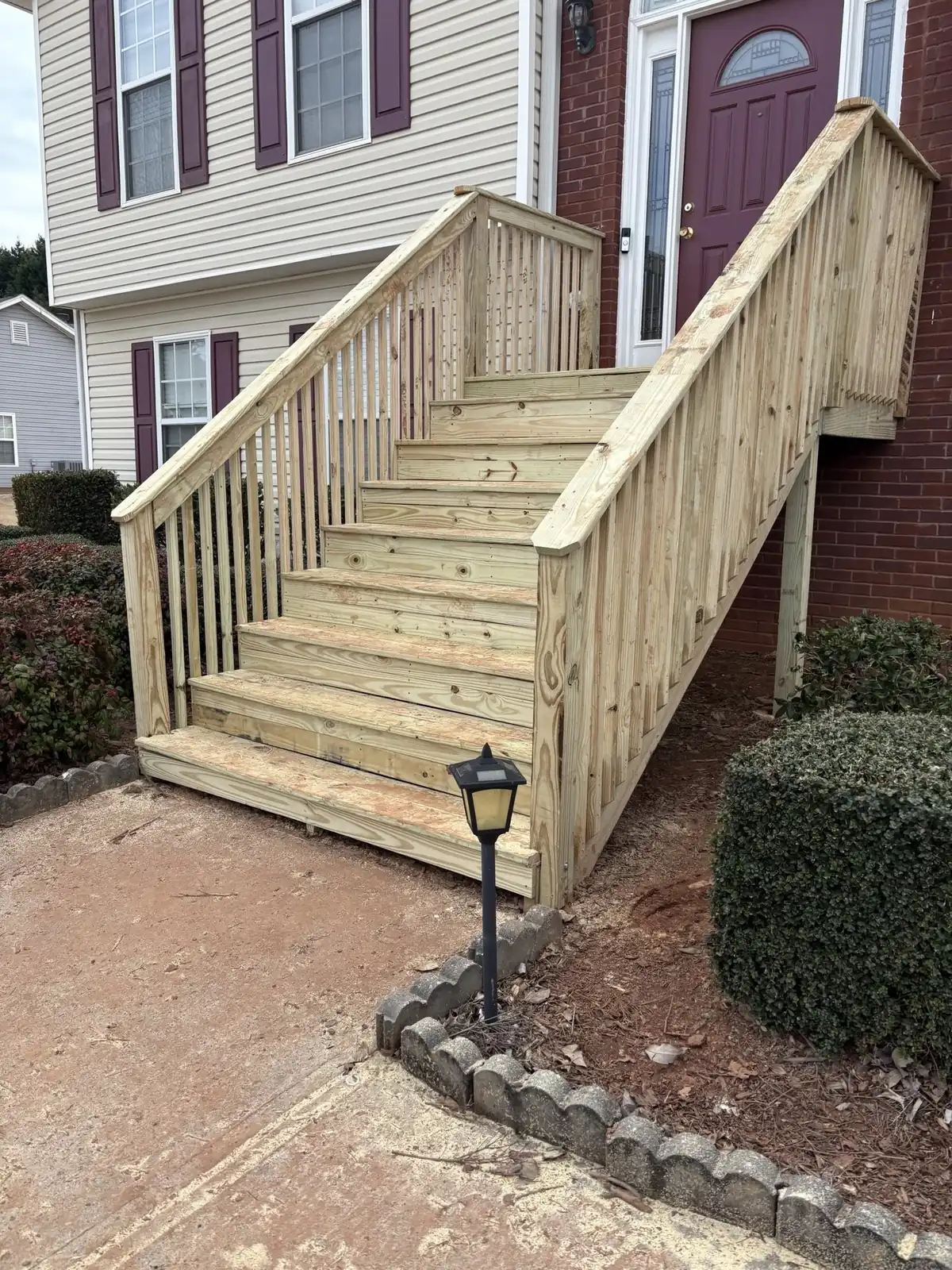
Decks and outdoor living
A deck is a structure, not a surface. Most of the failed decks we are called out to look at have a sound looking floor sitting on framing or a ledger that has been quietly rotting for years.
What is included
- Framing, footings, and ledger attachment built and flashed to code
- Composite, pressure treated, and hardwood decking, with the tradeoffs explained
- Rebuilds that keep sound framing and replace only what has failed
- Covered porches, pergolas, and roofed outdoor space tied properly into the house
- Railings, stairs, and lighting finished as part of the job
How to know you need it
- Bounce or sway when you walk across it or lean on the rail
- Dark staining or soft wood where the deck meets the house
- Fasteners backing out, or boards that have split around the screws
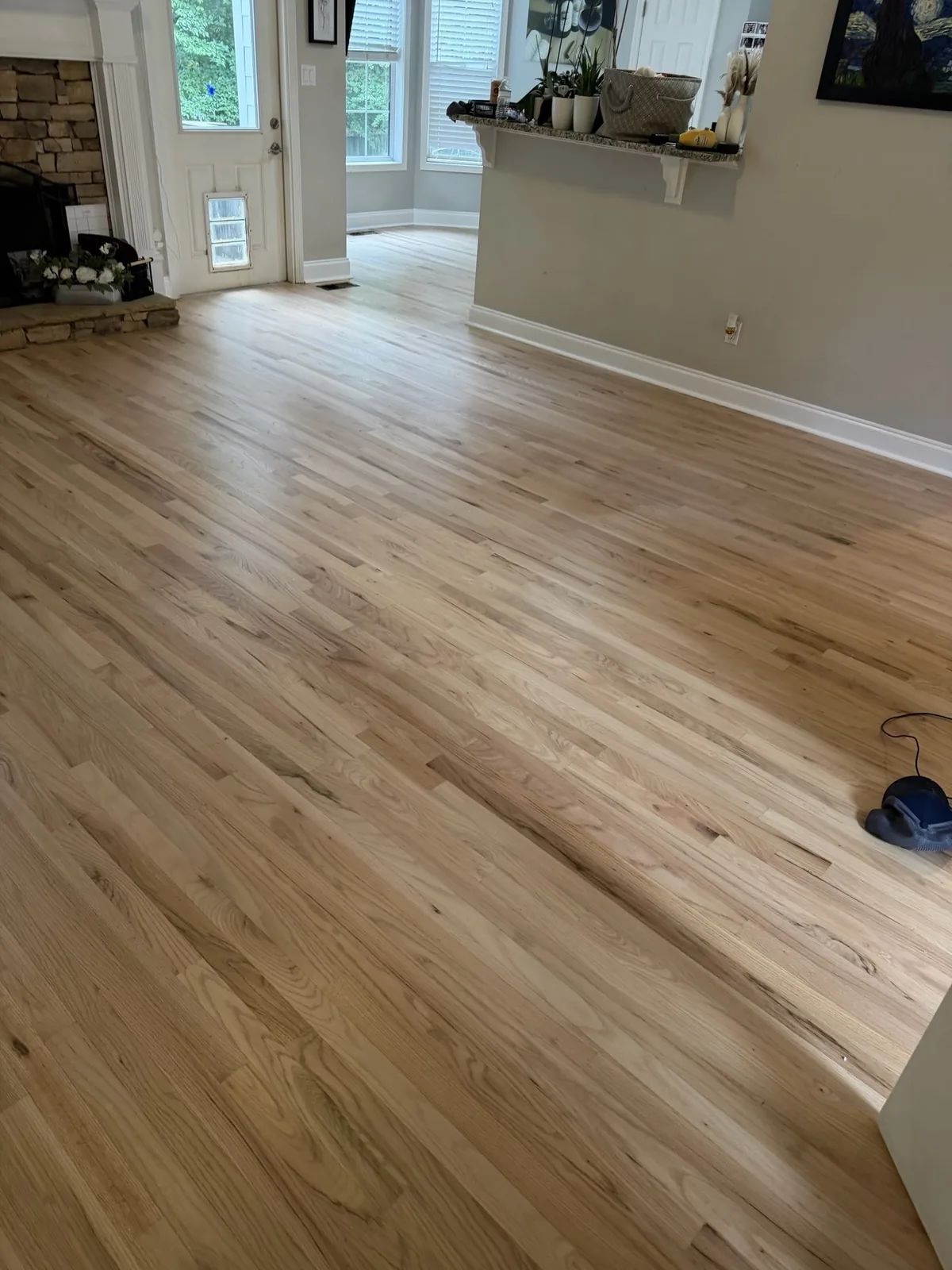
Interior restoration
When water gets in, fixing the roof is only half the job. The ceiling, the drywall, and the trim still show it. We finish the inside so you are not hiring a second contractor to make the repair look finished.
What is included
- Drywall and ceiling replacement, textured to match the existing finish
- Insulation replaced where it has been wet, since wet insulation stops working
- Trim, casing, and baseboard repaired or replaced
- Priming and paint, cut in to a clean break rather than a visible patch
- Coordination with the exterior repair so the inside is done last, once it is dry
How to know you need it
- A ceiling stain that keeps coming back through fresh paint
- Nail pops, cracking, or sagging in a ceiling below a known leak
- A musty smell in a room that does not clear with ventilation

Storm damage and insurance repairs
Storm work is a documentation job before it is a construction job. Claims are usually won or lost on whether the damage was recorded correctly and the repair was scoped correctly, both of which happen before anyone climbs on a roof to work.
What is included
- Full photographic documentation of the damage, dated and organized
- A written scope you can hand to your carrier
- Meeting the adjuster on site so you are not translating between us
- Supplement requests when the approved scope misses something real
- The repair itself, so the documentation and the work are not split between two companies
How to know you need it
- A hail or high wind event passed through your area in the last year
- Neighbors on your street are having roofs replaced
- Dents in gutters, downspouts, window screens, or a metal vent cap
- Shingles in the yard or in the flower beds after a storm
We cannot promise your carrier will approve a claim, and any contractor who does is guessing. What we can do is make sure the damage is documented properly and the scope is right.
Four steps, and you know where you stand at each one.
Inspection
We look at the whole building envelope, not just the spot you called about. Usually 45 to 60 minutes.
Findings
Photos of what we found, explained in plain language, with options ranked by what we would do if it were our house.
Scope and schedule
A written scope, a real timeline, and a straight description of what the work will be like day to day.
Completion and walkthrough
We finish, we clean up thoroughly, and we walk the property with you before we call it done.
Tell us what is going on with your property.
Send a few details or call. We will ask a couple of questions, schedule a look, and go from there. No obligation and no sales visit disguised as an inspection.